Average Size of Left Chest Logo: Expert Standards and Guidelines
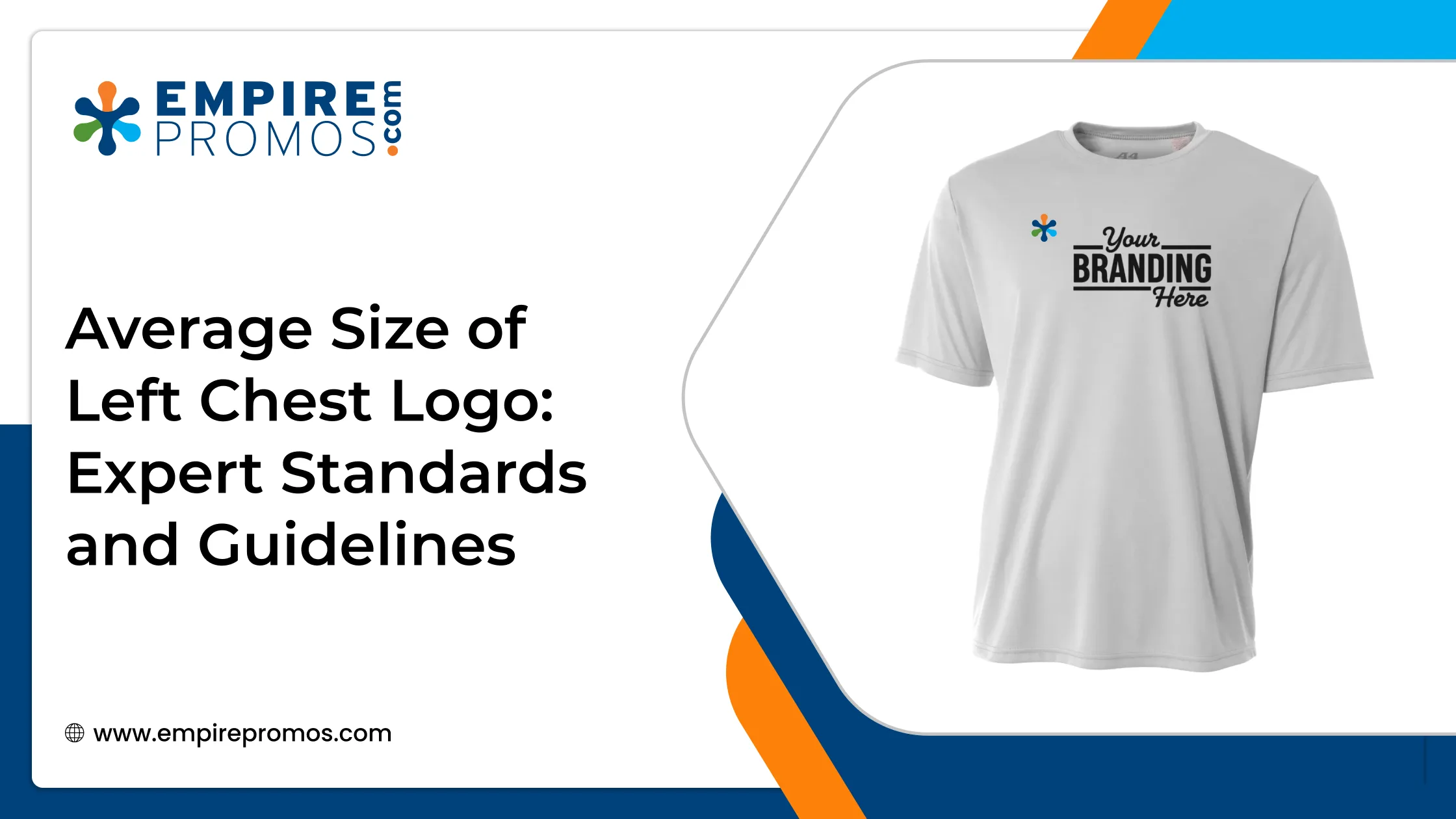
Choosing the right size for a left chest logo on a T-shirt is crucial, especially when businesses ask what is the standard size of a left chest logo for professional apparel. The standard size for an adult shirt is typically 3.5″ x 3.5″, while youth sizes generally use a 3″ x 3″ logo. These dimensions offer a balanced look that is neither too overpowering nor too small to be noticed.
Before finalizing artwork, it’s important to understand what is the standard size of a left chest logo and how placement affects visibility.
Some people may opt for larger designs, but the standard sizes remain popular for a reason. The placement of the logo, around 7-9 inches below the left shoulder seam, ensures that it remains prominently visible without overshadowing the entire shirt. This balance makes it a favorite choice for branded apparel, team uniforms, and promotional T-shirts.
Selecting the appropriate size and placement for your logo can significantly impact the overall appearance of your T-shirts. Whether you’re designing for a business or an event, keeping your logo within these standard dimensions will help maintain a polished and professional look.
Understanding Logo Placement
Effective logo placement on t-shirts impacts the overall look and feel of custom t-shirts. It matters for promotional t-shirts, company branding, and event apparel.
Logo Placement Basics
When it comes to t-shirt design, where you place your logo can make a big difference. The left chest is a popular spot for logos because it’s easy for others to see and it looks professional.
Other common areas include the center chest, upper back, and full back. Each location has its own advantages depending on the style and purpose of the shirt.
Screen printing, embroidery, and direct-to-garment printing are different methods used, and each may impact where the logo looks best.
Print Area Conventions
Industry conventions clearly define what is the standard size of a left chest logo for adult, youth, and pocket placements.
For left chest placement, the standard size usually ranges from 3.5 inches by 3.5 inches for adult shirts to 3 inches by 3 inches for youth shirts. Pocket logos also typically use the 3-inch by 3-inch size.
The center chest logo often covers a larger area, tending to be around 8 inches by 8 inches. This location is great for more prominent designs. The full back logo is even larger, commonly around 12 inches by 12 inches.
Whether you choose the left chest or another spot, the print area must be suitable for the logo and shirt size to ensure the design stands out and looks balanced.
Specific Placement Considerations
Left chest placement is suitable for company logos and event shirts where subtlety and professionalism are key. This spot is also handy for shirts with pockets.
If it’s a promotional t-shirt meant to grab attention, you might prefer a center chest or full back placement. Both these areas support larger and bolder designs.
Right chest placement is less common but could be used for dual-logo situations, such as a company logo on the left and a sponsor logo on the right.
Choosing the right print method, screen printing, embroidery, or direct-to-garment printing, is also essential. Embroidery works well for smaller areas like the left chest, while screen printing is versatile for almost any area.
Understanding these details ensures your custom t-shirts look their best, whether for casual wear, promotional use, or professional branding.
Design and Sizing Guidelines
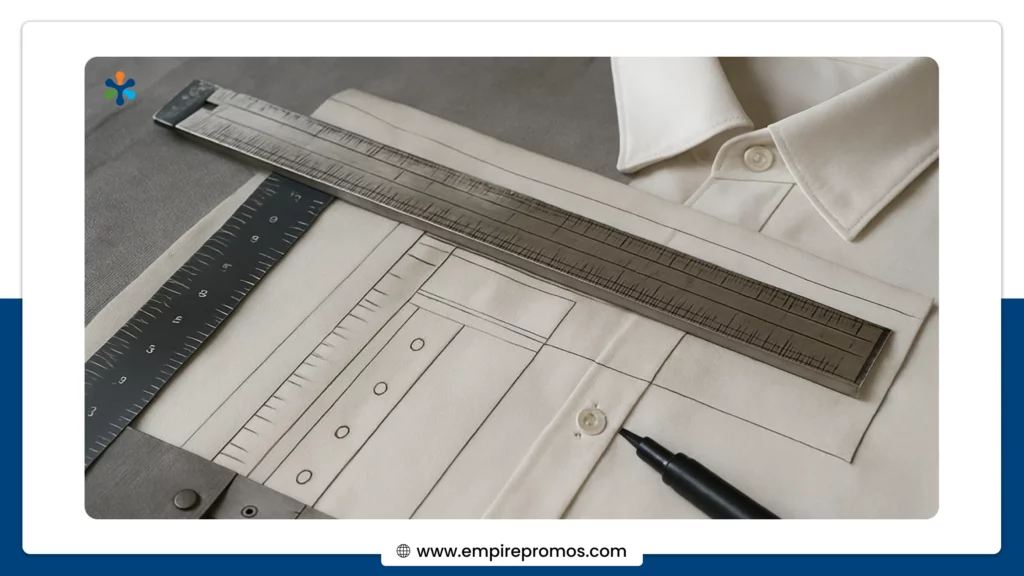
Design consistency starts with knowing what is the standard size of a left chest logo and scaling artwork appropriately. Ensuring your logo looks great on a t-shirt involves choosing the right size, paying attention to graphic design elements, and following a t-shirt design placement guide. Here’s what you need to know.
Standard Size Specifications
For adult t-shirts, a common size for a left chest logo is 3.5″ x 3.5″. For youth t-shirts, the size usually drops to 3″ x 3″. When dealing with pocket designs, the logo size typically remains at 3″ x 3″. These dimensions help ensure the logo is noticeable without overpowering the shirt.
Keep in mind that the maximum size should stay within these guidelines to maintain a clean and professional look. Deviating too much from these standard sizes can lead to a disproportionate appearance.
Graphic Design Elements
When designing a left chest logo, it’s important to consider several design elements. Fonts should be legible at the given size, so avoid overly intricate or tiny fonts. Images need to be clear and not too detailed, as fine details can get lost when scaled down.
Branding should be consistent across all your designs. The logo’s colors, style, and overall design should align with your brand’s message. A versatile design that maintains its integrity when resized is key. Simplifying your artwork can often result in a more effective and visually appealing logo.
T-Shirt Design Placement Guide
Following placement guides ensures logos meet expectations for anyone asking what is the standard size of a left chest logo across apparel sizes. Proper placement of your left chest logo is crucial for a balanced look. Typically, the logo is centered proportionally between the sleeve and the collar. This ensures it appears well-placed and not skewed to one side.
For full front design or back design placements, the size and scale might increase significantly, usually 12″ to 15″ wide and 14″ to 16″ tall. For sleeve placement, smaller logos are preferable, often around 2″ x 2″.
Placement should be consistent across shirt sizes. Smaller shirts might require scaling down the logo, while larger shirts generally maintain the standard size. Keep these guidelines in mind to achieve a balanced and professional look on every shirt.
Technical Aspects of Printing
Printing t-shirt logos requires attention to various technical details to ensure high-quality results. It’s important to consider techniques, digital artwork preparation, and the stages of the printing process.
Screen Printing Techniques
Screen printing is a popular method for t-shirt logos. It involves creating a stencil (or screen) and using it to apply layers of ink on the shirt.
Key points:
- Mesh Count: The mesh count of the screen influences the detail and quality of the print. High mesh counts are better for fine details.
- Ink Use: Plastisol is commonly used due to its opacity and vibrant colors. Water-based inks are more eco-friendly and give a softer feel.
- Curing: Properly curing the ink is crucial. It usually requires heat setting the print around 320°F to ensure durability.
This technique is highly effective for larger batches of shirts due to its efficiency and cost-effectiveness.
Digital Artwork Preparation
Preparing your artwork digitally is a vital step to achieve a crisp, clear print.
Key points:
- File Types: Use high-quality file types such as PNG or JPG. PNG files are preferred for their transparency support.
- Resolution: Ensure the artwork is at least 300 DPI (dots per inch) to avoid pixelation.
- Image Size: Match the design dimensions to the intended print size. For a left chest logo, an image size around 3.5″ x 3.5″ is typical for adults.
Pay attention to color modes; RGB is for screens, while CMYK is for printing. Proper preparation will help avoid print errors and ensure the design looks as intended.
Printing Process Overview
The actual printing process starts once the artwork is ready and the technique is chosen.
Key points:
- Setup: For screen printing, this involves making the screens. For direct-to-garment printing, it’s setting up the printer and loading the digital file.
- Print Placement: Accurate placement on the shirt is crucial. Center the logo typically 7-9 inches from the top of the neckline for left chest logos.
- Quality Control: Check the first few prints for color accuracy, print clarity, and placement. Adjust as needed.
For other methods like heat transfer, ensure the heat press settings match the transfer material requirements. Each step needs precision to create high-quality t-shirts.
Material and Apparel Variations
Fabric type and garment style influence how what is the standard size of a left chest logo is applied in real-world production. Different materials and types of apparel can affect how a left chest logo appears and behaves on a shirt. Factors such as shirt sizes, types, and textile characteristics play critical roles in logo placement and sizing.
T-Shirt Sizes and Types
When selecting a left chest logo size, shirt size is an important factor. For adult shirts, a standard size is typically 3.5″ x 3.5″. Youth shirts often have a 3″ x 3″ logo.
Types of shirts include:
- Short Sleeve T-Shirts: Commonly used for casual wear, they offer a versatile canvas for left chest logos.
- Long Sleeve T-Shirts: These can accommodate the same logo sizes as short sleeves but require careful placement due to the longer fabric.
- Polo Shirts: Popular in professional and semi-formal settings; their fabric and fit may necessitate a slightly different logo size.
- Onesies: For infants, smaller logos around 2.5″ x 2.5″ work best to ensure proper fit without overwhelming the small garment.
Textile Characteristics
The texture and fabric of a shirt can influence both the design and placement of a left chest logo. Cotton is soft and absorbent, making it ideal for embroidery and printed logos.
Textile characteristics to consider:
- Polyester: Often used in sportswear, this fabric is lightweight but can be less forgiving with embroidery as loose threads might occur.
- Blends: A mix of cotton and polyester or other fibers can affect the durability and appearance of the logo.
- Texture: Smooth fabrics work well with detailed logos. Textured fabrics like pique on a polo shirt may require simpler designs to ensure clarity.
Special Items and Locations
Certain items and logo placements require special consideration.
Oversize logos: Designs intended for larger displays, such as oversize front logos, need adjustments to maintain visibility and aesthetics.
Special items include:
- Pockets: Logos for pocket placement are generally 3″ x 3″ to align with the pocket’s size.
- Hoodies: The thicker material and additional seams need a 4″ x 4″ logo to ensure it stands out.
- Athletic Wear: Items designed for physical activity may use moisture-wicking fabrics that require logos to be heat-transferred or screen-printed for durability.
Each combination of material and garment type brings specific requirements and adjustments to ensure the left chest logo looks professional and fits well.
Target Audience and Brand Identity
Brand consistency relies on applying what is the standard size of a left chest logo across all apparel types. Understanding your target audience and designing for brand identity is key when creating a custom t-shirt with a left chest logo. These considerations help ensure your promotional t-shirt is effective and resonates with the intended crowd.
Brand Recognition Strategies
Brand recognition is crucial for any promotional t-shirt. When placing a left chest logo, make sure the size and design are easily noticeable but not overpowering. A common size is around 3 inches by 3 inches for youth shirts and 3.5 inches by 3.5 inches for adult shirts. This makes the logo visible without overwhelming the shirt.
Clear and simple logos are often more memorable. Use colors that align with your brand’s palette to make it instantly recognizable. For instance, a minimalistic design can give off a sophisticated vibe, making it suitable for corporate settings.
A well-placed logo connects with the audience quickly, helping in brand recall. Consistent logo size and placement across various shirts create coherence in your branding strategy, enhancing overall recognition.
Audience-Specific Design
Tailoring the logo design to your target audience is vital. For a younger crowd, you might opt for bright colors and playful designs. In contrast, a more mature audience might prefer subtle, elegant logos. This ensures that your branding appeals to the right group.
Consider the type of apparel too. Casual t-shirts might feature larger, more dynamic logos, suitable for sports teams or clubs, whereas formal gear like polo shirts might benefit from smaller, understated logos.
Think about the context in which the t-shirt will be worn. For events, bolder logos can make a statement. For everyday wear, a more modest design might be preferred. Matching your logo design to the clothing style and audience’s taste ensures higher engagement and better brand identity.
Case Studies and Practical Examples
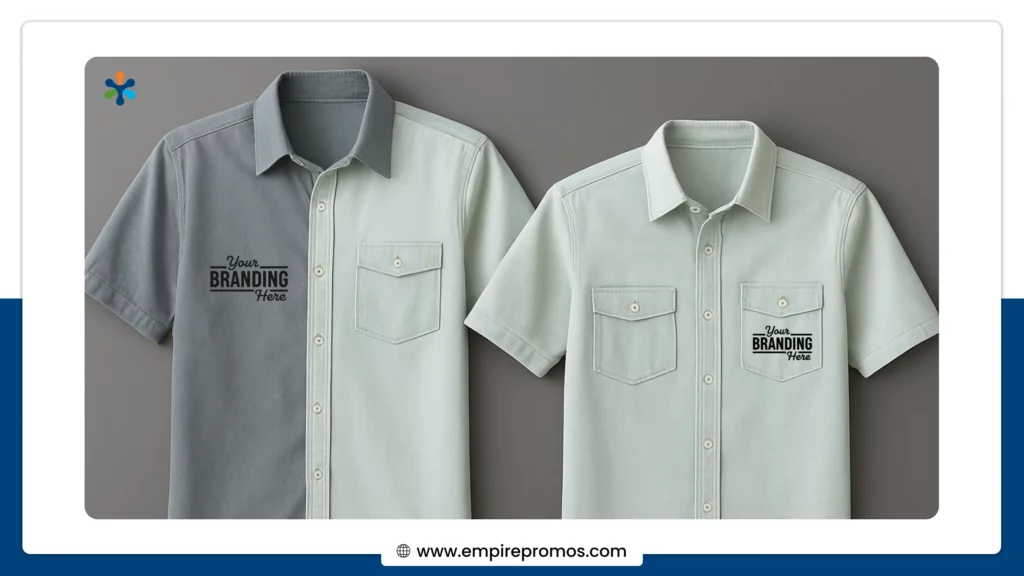
Many companies use different sizes for their left chest logos on t-shirts based on their branding needs. Here are a few practical examples to illustrate:
1. Corporate Uniforms:
A company providing uniforms for employees often opts for a standard size. The average size for an adult shirt is typically 3.5″ x 3.5″. This ensures that the logo is visible and maintains a professional appearance.
2. Sports Teams:
Youth sports teams often use slightly smaller logos. The size for youth shirts is usually 3″ x 3″. This helps maintain the visibility of the logo without overwhelming the smaller shirt.
3. Promotional Shirts:
For promotional t-shirts, businesses sometimes choose oversized logos to make a stronger visual impact. While the standard size is common, some opt for sizes up to 4″ x 4″.
Here’s a table that summarizes these examples:
| Use Case | Average Size | Anchor Point |
| Corporate Uniforms | 3.5″ x 3.5″ | Left Chest |
| Youth Sports Teams | 3″ x 3″ | Left Chest |
| Promotional Shirts | Up to 4″ x 4″ | Left Chest |
4. Pocket Logos:
When the logo is placed on a pocket, the typical size remains 3″ x 3″. This is because it fits well within the space of the pocket without looking cramped.
5. Casual Wear:
For casual wear like t-shirts or polo shirts, a logo size of 3.5″ x 3.5″ is often used. This size strikes a balance between visibility and subtlety, making it an effective choice for everyday apparel.
Using these examples, you can better understand how to choose the size and placement of your left chest logo to suit various needs.
Wondering what is the standard size of a left chest logo for your custom apparel? Getting logo dimensions right is essential for professional branding, clean placement, and consistent results. From T-shirts and polos to hoodies and uniforms, size and positioning make a visible difference. That’s where Empire Promos can help, offering expert guidance and precision customization for branded apparel. Work with a promotional products supplier that understands sizing standards, print methods, and brand consistency.
Frequently Asked Questions
When designing logos for the left chest area of shirts, it’s important to get the dimensions and placements right for the best visual impact. Below are common questions businesses ask when determining what is the standard size of a left chest logo.
What are the standard dimensions for a logo placed on the left chest area of a shirt?
The standard size for a left chest logo on adult shirts is typically between 3.5 inches by 3.5 inches and 4 inches by 4 inches. For youth shirts, the usual dimensions are around 3 inches by 3 inches.
Where should a left chest logo be positioned for optimal visibility and aesthetics?
A left chest logo should be positioned about 7-9 inches down from the shoulder seam. It should also be centered between the middle of the shirt’s front and the side seam for balanced and eye-catching placement.
How do the size requirements for a left chest logo differ for various types of apparel, such as tees and hoodies?
For T-shirts, standard sizes are often used, such as 3.5 inches by 3.5 inches for adults. Hoodies may require slightly larger logos due to the thicker material and larger surface area. You might opt for logos around 4 inches by 4 inches for hoodies to ensure they stand out.
Is there a recommended size chart for logos to be used on the front chest of garments?
Yes, many designers and print shops follow these guidelines:
- Adult T-shirts: 3.5 inches by 3.5 inches to 4 inches by 4 inches
- Youth T-shirts: 3 inches by 3 inches
- Hoodies: 4 inches by 4 inches
What is the ideal scale for a logo when designing for the left chest pocket of a shirt?
When placing a logo on the left chest pocket, keep the dimensions smaller to ensure it fits well. The ideal size is around 3 inches by 3 inches, which fits neatly without overwhelming the pocket space.
How should one determine the appropriate proportions of a chest logo for different garment sizes?
Consider the size of the garment and the area where the logo will be placed. For larger garments like XL and above, you may scale the logo up slightly while maintaining balance. Smaller garments might require you to scale the logo down to ensure it looks proportional and does not dominate the shirt’s front.