
Polyester vs Cotton Shirts: Choosing the Best Material for Your Wardrobe
When considering clothing materials, the debate often centers on polyester vs cotton, especially when choosing shirts for everyday or performance wear.
Polyester is a synthetic fiber known for its durability, resistance to wrinkles and shrinkage, and quick drying properties. It’s particularly suited for active wear or for those seeking low-maintenance garments.
On the other hand, cotton is a natural fiber that is prized for its softness, breathability, and comfort. It’s an excellent choice for everyday wear, especially in warmer climates, as it allows for better air circulation. However, cotton can wrinkle and shrink with washing and wear, and typically requires more care than polyester.
In our wardrobe selections, we often encounter a blend of these two materials. The popular 50/50 cotton-polyester blend attempts to offer the best of both worlds: resilience and comfort. The blend is often easier to care for and retains the soft feel of cotton, while also incorporating the moisture-wicking and durable aspects of polyester.
Materials Overview: Polyester vs Cotton
In this section, we’ll examine the distinct characteristics of polyester vs cotton as materials for shirts, focusing on their fundamental properties and essential aspects.
Cotton Fundamentals
Cotton is a natural fiber known for its softness and high breathability. We understand its primary benefits to include:
- Comfort: Cotton fibers provide a soft feel, offering comfort for a variety of skin types.
- Moisture Absorption: The ability to absorb moisture helps regulate body temperature and makes cotton suitable for year-round use.
The chief considerations when working with cotton are:
- Care: Cotton garments usually require more delicate care to maintain their appearance and feel.
- Environmental Impact: As a natural product, cotton is biodegradable and is generally more sustainable than synthetic fibers.
Polyester Essentials
Polyester, a synthetic fiber, is valued for its durability and low maintenance. Key advantages we associate with polyester include:
- Durability: Polyester fibers are strong and resist stretching, shrinking, and wrinkle formation.
- Maintenance: Easy to care for, polyester is well-suited for active and busy lifestyles.
However, we note that polyester comes with the following concerns:
- Breathability: It is generally less breathable than cotton, which may not be as comfortable in warm conditions.
- Environmental Footprint: Being petroleum-based, polyester’s environmental footprint is larger than that of cotton.
Advantages and Disadvantages
When comparing polyester vs cotton shirts, it’s essential for us to consider their individual benefits and drawbacks. We’ll look at how each material performs in areas such as durability, comfort, and its impact on the environment.
Benefits of Cotton
- Comfortable: We find cotton to be soft and gentle, making it an excellent choice for those with sensitive skin.
- Breathable: This natural fiber allows for better airflow, which helps in regulating body temperature.
- Environmentally Friendly: It’s biodegradable and, when farmed sustainably, can be more environmentally friendly.
Drawbacks of Cotton
- Moisture Absorbency: While cotton is breathable, it tends to absorb moisture rather than wicking it away, which can be uncomfortable in active situations.
- Durability: Cotton is less durable compared to polyester; it can shrink and wear out faster.
- Use of Pesticides: Conventional cotton farming can involve significant pesticide use, impacting the environment negatively.
Pros of Polyester
- Durability: Polyester is highly resistant to abrasion and maintains shape and color after washing, leading to longer-lasting garments.
- Moisture-Wicking Properties: It is engineered to wick moisture away from the skin, keeping the wearer dry and comfortable during physical activity.
Cons of Polyester
- Comfort: Polyester might feel less natural against the skin, which could be a disadvantage for those with sensitivities.
- Environmental Impact: Being a synthetic fiber, polyester is not biodegradable and its production is energy-intensive.
- Temperature Regulation: It is less breathable than cotton, which can cause discomfort in hot conditions.
Properties and Performance
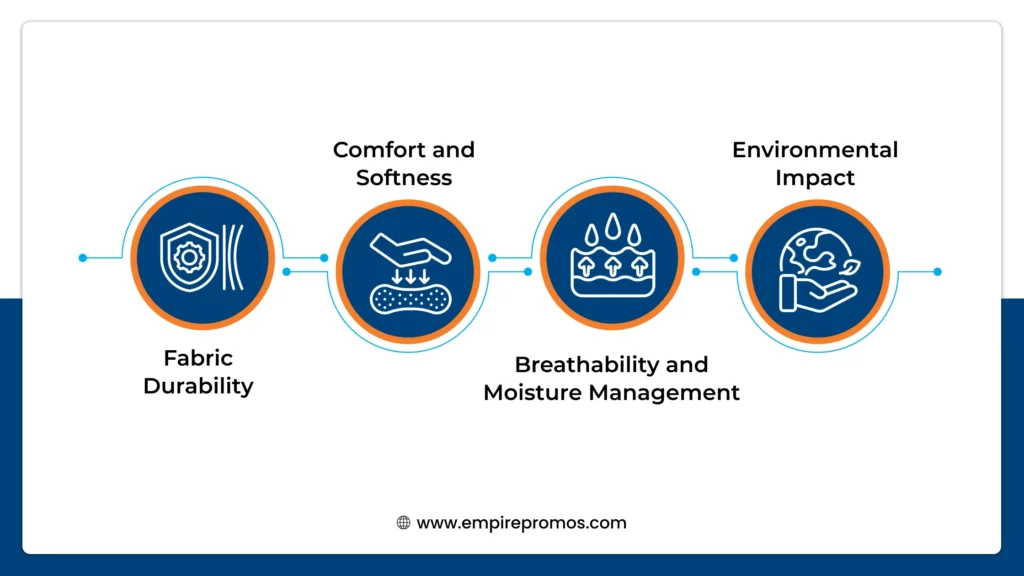
In our comparison of polyester vs cotton shirts, we examine multiple characteristics that define how each fabric performs under various conditions. These include durability, comfort, breathability, and environmental impacts, all critical factors in determining the suitability of these materials for different uses.
Fabric Durability
Polyester, a synthetic fiber, touts a high level of durability. It is known for being wrinkle-resistant and less prone to shrinkage and staining, which allows garments to maintain their shape and appearance over time. This resilience makes polyester a popular choice for items that require frequent wear and washing.
Cotton, while a natural fiber, can also be quite durable, especially when it comes to holding dye and withstanding heat, which is ideal for tie-dying. However, cotton shirts tend to show wear more quickly than polyester, as they are more susceptible to wrinkles and shrinkage.
Comfort and Softness
The softness of a shirt significantly affects its comfort. Cotton is inherently soft and comfortable, often used in clothing that is worn close to the skin. Its natural fibers are considered hypoallergenic, making it a suitable option for those with sensitive skin. Ring-spun cotton is particularly smooth and comfortable.
Polyester’s softness varies by fabrication, and while it may not match the softness of high-quality cotton, advancements in textile manufacturing have improved its feel over the years.
Breathability and Moisture Management
When it comes to breathability, polyester vs cotton, cotton is superior due to its natural fiber properties, which promote air circulation and help regulate body temperature. This also contributes to moisture absorption, which can be a double-edged sword; while cotton can absorb sweat, it does not dry quickly, which can lead to a damp feel.
Polyester is not as breathable as cotton, but excels in moisture-wicking. This makes it a solid choice for athletic wear or other contexts where quick drying is advantageous, helping wearers stay cool and dry by allowing perspiration to evaporate faster.
Environmental Impact
Our environmental footprint is crucial when considering fabric choices, such as polyester vs. cotton. Cotton is a natural, biodegradable material that is often praised for its sustainability. However, its cultivation can be resource-intensive, requiring substantial water and pesticides.
In contrast, polyester is derived from petroleum, a non-renewable resource, and is not biodegradable. However, it has a longer lifespan, potentially reducing waste through lower turnover. Recent efforts to recycle polyester and improve its sustainability profile have mitigated some environmental concerns associated with its production.
Fashion and Functionality
We see a clear distinction in the fashion and functionality offered by polyester and cotton, influencing the choice we make in apparel.
Aesthetic Appeal
Cotton Shirts:
- Style: Cotton is known for its classic look and natural sheen, granting a timeless appeal to garments such as t-shirts and polos.
- Versatility: Given its ability to hold dye well, we often prefer cotton for custom t-shirts that require vibrant and lasting colors.
Polyester Shirts:
- Style: Polyester’s synthetic nature provides a canvas for bold and bright aesthetics, often preferred in modern designs.
- Wrinkle Resistance: The minimal wrinkling of polyester is a desirable feature for us when we require a clean, maintained look without much effort.
Functional Uses in Apparel
Cotton Shirts:
- Comfort: We appreciate cotton’s soft and breathable qualities, making it particularly suitable for everyday wear and in warmer climates.
- Environmental Impact: Being a natural fiber, cotton is biodegradable, positioning it as an environmentally friendlier option for us who are eco-conscious.
Polyester Shirts:
- Performance Fabric: The lightweight and durable nature of polyester makes it a staple for us in athletic apparel and activewear.
- Moisture Wicking: We find polyester shirts highly functional for performance due to their moisture-wicking properties, ideal for keeping us dry during physical activities.
Care and Maintenance
When it comes to taking care of polyester vs cotton shirts, we encounter distinctly different needs for each material.
Polyester, as a synthetic fabric, boasts easy-care qualities. It is wrinkle-free by nature, making it convenient for those who have little time to iron.
On the other hand, cotton is prone to wrinkles and often requires ironing after washing.
For moisture absorption, cotton excels, lending a hand to those who seek breathability in their clothing. This attribute, however, comes with the caveat that cotton can hold onto stains more stubbornly.
Polyester, while not as absorbent, has a less porous surface, which aids in resisting stains.
| Fabric | Wrinkle Resistance | Moisture Absorption | Stain Resistance |
| Cotton | Low | High | Low |
| Polyester | High | Low | High |
In our experience, polyester shirts require less special attention and can generally be machine-washed and dried without issue. This includes tumble drying on a low setting if necessary.
Meanwhile, cotton shirts often demand a gentler approach. We recommend washing them in warm or cool water and either air drying or using a low heat setting to minimize potential shrinkage and maintain the fabric’s integrity.
Polyester can occasionally retain oily stains after a wash. It benefits from pre-treatment with stain removers prior to washing.
Meanwhile, spills on cotton may also require pre-treatment but are usually more responsive to washing detergents due to the fabric’s natural fibers.
Production and Printing
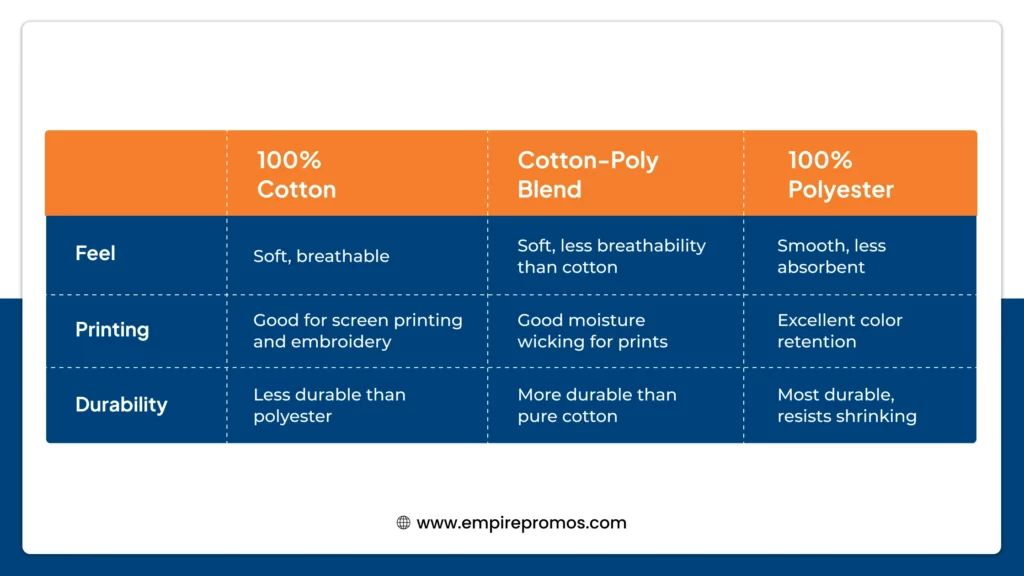
When it comes to the production of textiles for polyester vs cotton shirts, there are significant differences between 100% cotton, 100% polyester, and their blends.
We typically find that 100% cotton is a natural fiber known for its breathability and comfort, ideal for screen printing and embroidery due to its softness and absorbency.
Organic and ringspun cotton offer even finer textures, suitable for high-detail designs.
On the other hand, 100% polyester is a synthetic fiber that excels in durability and color retention. Its resistance to shrinking and wrinkling makes it a favored option for vibrant and complex prints.
Blended fabrics, such as the commonly used cotton-poly blends, combine the best of both worlds. These blends benefit from the strength and printability of polyester while retaining the comfort of cotton. Here’s a glance at the key properties:
In production, ring-spun cotton is often spun for a tighter and smoother weave, which is excellent for detailed printing methods.
As for printing techniques, screen printing yields highly durable and bold designs on cotton, whereas polyester often employs methods like dye sublimation for sharp, vibrant imagery.
Our expertise acknowledges that while cotton may absorb more ink for a richer appearance, polyester and its blends provide longevity to the prints.
We ensure the selection of the appropriate fabric and printing method aligns with the desired outcome of the production, be it for comfort, durability, or visual appeal.
Market Considerations
In assessing the market for polyester vs cotton shirts, we must focus on price points and consumer demand, which are critical factors that influence both the buyer’s choice and the seller’s stock.
Price Points
When evaluating affordability, it’s evident that 100% cotton shirts generally cost more due to the resources required for cultivation, such as land and water. Additionally, they tend to be favored by screen printers for their excellent dye-retention properties, which can add to the cost.
In contrast, 100% polyester is often more budget-friendly owing to the cost-effective manufacturing process, even though the initial setup might be chemical-intensive.
Consumer Demand
Consumer choices are increasingly tilting towards sustainable options, bolstering demand for cotton shirts, which are perceived as more eco-friendly.
However, polyester shirts offer longevity and easy maintenance, which makes them popular for active wear and outdoor apparel.
We find that consumer preferences vary widely by need, with some opting for the softness and comfort of cotton, while others prefer the durability and vibrant color of polyester.
The right fabric choice affects comfort, durability, and how often a shirt is actually worn.
Understanding material differences helps you select apparel that fits your audience, environment, and purpose. That’s where Empire Promos can help, offering customizable apparel options in cotton, polyester, and blended fabrics. Explore high-quality clothing solutions designed for performance, comfort, and brand visibility. Make smarter fabric choices that your team and customers will appreciate.
Frequently Asked Questions
In this section, we’re addressing common inquiries regarding cotton and polyester shirts, providing clear distinctions to inform your choices in fabrics.
What are the benefits of choosing cotton shirts over polyester?
Cotton shirts are especially notable for their softness and breathability. They provide a high level of comfort and regulate body temperature effectively, which makes them suitable for a range of climates and year-round wear.
How does polyester apparel perform in hot weather compared to cotton?
Polyester is known for its moisture-wicking properties, which draw sweat away from the skin, helping to keep the body cool. However, it is not as breathable as cotton and may not be as comfortable in extremely hot weather.
What are the longevity differences between cotton and polyester shirts?
Polyester shirts have a strong resistance to wear and tear, which generally makes them more durable than cotton shirts. Polyester is less susceptible to shrinking and maintains its shape over time compared to cotton.
How do cotton and polyester shirts differ in terms of breathability?
Cotton shirts are highly breathable, allowing air to circulate and moisture to evaporate, which contributes to their ability to help maintain body temperature.
Polyester, while moisture-wicking, does not offer the same level of air circulation due to its tighter weave.
What are the cost comparisons between cotton and polyester shirts?
Generally, polyester shirts tend to be less expensive than cotton because polyester is a less resource-intensive material to produce. However, prices can vary depending on the quality and brand of the shirts.
What are the pros and cons of a cotton-polyester blend in T-shirts?
A blend of cotton and polyester attempts to capture the best of both materials. It has the softness and breathability of cotton, combined with the durability and wrinkle resistance of polyester. However, blends may not be as gentle on sensitive skin compared to 100% cotton. They also might not offer the same level of comfort as a pure cotton shirt.